Guides
Animal Hospital Finance: Entity Types and Federal Returns
Animal hospital finance for US veterinary practices: entity types, federal returns, owner pay, worker classification, and equipment deductions.
What to take away
- Animal hospital finance in the United States comes down to four decisions: entity type, owner pay, worker status and how equipment is written off.
- A sole proprietor reports on Schedule C and pays self-employment tax on net profit; an S corporation splits profit into wages and a distribution.
- Associate veterinarians are almost always employees. The IRS worker classification test looks at behavioral control, financial control and the working relationship.
- Form 2553 must be filed within two months and 15 days of the tax year the election takes effect, and it needs every shareholder's consent.
- Section 179 lets a practice deduct the full cost of qualifying equipment in the year it is placed in service, subject to taxable income limits.
- Keep the paperworkEIN, payroll records, depreciation schedules and a reasonable compensation memo.
Entity choice for a US veterinary practice: sole proprietor, partnership, S corporation
The legal form you pick decides which return you file, how much self-employment tax you pay and how much paperwork lands on your desk each spring. Most single-doctor practices start as sole proprietors because it costs nothing to begin. Growth changes the arithmetic.
Entity choice at a glance
Sole proprietor
- Return filed
- Schedule C + 1040
- Payroll tax on
- All profit
- Owner is
- Self-employed
- Best fit
- Single doctor start
Partnership
- Return filed
- Form 1065 + K-1
- Payroll tax on
- Distributive share
- Owner is
- Partner
- Best fit
- Two doctors split
S corporation
- Return filed
- Form 1120-S + K-1
- Payroll tax on
- Salary only
- Owner is
- Employee
- Best fit
- Three-vet practice
A sole proprietor files Schedule C with the 1040. Profit is taxed once, but it carries self-employment tax, which covers Social Security and Medicare.
Publication 334 walks through the Schedule C reporting and self-employment tax rules that apply to a sole-proprietor practice, including the home office and vehicle deductions owners ask about first. Publication 334 (2025), Tax Guide for Small Business | Internal Revenue Service
A partnership files Form 1065 and issues Schedule K-1 to each partner. Partners are not employees, so they pay self-employment tax on their distributive share. Two doctors who split call and surgery time often fit here, but partnership agreements need to say who decides what when the partners disagree.
An S corporation is the structure most three-vet practices eventually reach. The practice files Form 1120-S, pays each owner-doctor a salary through payroll, and distributes remaining profit as a shareholder distribution. Only the salary portion carries payroll tax. That split is the entire point of the election, and it is also where the IRS looks hardest.
A C corporation pays its own tax on profit and then shareholders pay tax again on dividends. Few veterinary practices choose it unless outside investors are involved or the owners want fringe benefits that only C corporations allow.
Entity choice for a US veterinary practice
Return filed
- Sole proprietor
- Schedule C with 1040
- Partnership
- Form 1065
- S corporation
- Form 1120-S
- C corporation
- Form 1120
Owner pay
- Sole proprietor
- Draws
- Partnership
- Partner draws
- S corporation
- W-2 wages
- C corporation
- W-2 wages
Payroll tax base
- Sole proprietor
- All net profit
- Partnership
- Partner's distributive share
- S corporation
- Wages only
- C corporation
- Wages only
Entity choice also affects how a buyer values the practice later. An S corporation with clean payroll records and a documented compensation policy is easier to sell than a sole proprietorship whose profit and owner pay are mixed together in one account.
A practice that uses veterinary practice scheduling to document appointments can reconcile clinical activity with its books, giving a lender or buyer a clearer operating picture. Those records do not replace the bookkeeping needed to prepare tax returns.
Reasonable compensation for associate veterinarians and owner-doctors
Reasonable compensation is the salary an owner-doctor would have to pay someone else to do the same work. The IRS has no formula. It looks at training, duties, hours, the practice's gross receipts and what comparable practices pay.
Reasonable compensation example
- $1.4 millionpractice gross receipts
- $120,000associate salary
- $150,000owner-doctor salary
- Remainderdistributed as profit
Associates are employees. Their pay is straightforward: a salary or production percentage, payroll taxes withheld, a W-2 in January. The harder question is what the owner-doctor should pay themselves once the practice elects S corporation status.
A common approach is to set owner pay near the market rate for an associate with similar experience, then adjust for the owner's extra management duties. A practice grossing $1.4 million with three doctors might pay an associate $120,000 and the owner-doctor $150,000, with the remaining profit distributed.
Too low a salary invites an audit. The IRS can reclassify distributions as wages, assess back payroll tax and add penalties. Too high a salary wastes payroll tax on money that could have been a distribution.
Document the reasoning. A one-page memo citing local salary surveys, the owner's clinical hours and management responsibilities is worth more than a round number picked to minimize tax. Paying veterinary practice staff at market rates, including associates, also supports the compensation figure if it is ever questioned.
Owner-doctors who take most of their income as distributions while working full clinical weeks are the classic audit target. The gap between the salary and what an associate would earn for the same schedule is the exposure.
Payroll timing matters too. An S corporation owner must be on payroll from the first day the election is effective, with regular payroll runs, not one lump sum in December.
1099 versus W-2 status for relief vets and locums under IRS tests
The IRS worker classification test asks three things: behavioral control, financial control and the type of relationship. A relief veterinarian who covers shifts on the practice's schedule, uses the practice's equipment and cannot send a substitute is an employee, whatever the invoice says.
Employee or contractor?
Does the practice control schedule, patients and records?
employee: payroll taxes, workers' comp, unemployment
contractor: Form 1099-NEC, self-employment tax
A locum who runs their own business, works for several practices, sets their own hours, supplies their own instruments and can send another veterinarian in their place looks more like a contractor. The IRS explains the factors in its guidance on who counts as an independent contractor. Independent contractor defined | Internal Revenue Service
Most short-term relief work fails the test. The practice controls when the vet arrives, which patients they see and how records are kept. That is employment, and the practice owes payroll taxes, workers' compensation coverage and unemployment insurance.
Misclassification is expensive. The practice can owe the employee's share of payroll tax, its own share, penalties and interest, plus state penalties. Some states apply their own stricter tests, so a practice in California or New York should check state rules before treating a locum as a contractor.
A true independent contractor receives a Form 1099-NEC and pays self-employment tax on the full amount. That vet is responsible for their own quarterly estimates and their own liability insurance.
The practical rule: if the practice tells the vet when to show up and what to do, put them on payroll. If the vet sells a service to several practices on their own terms, a 1099 is defensible. When the answer is unclear, payroll is the cheaper mistake.
Filing Form 2553 and living with Form 1120-S obligations
An S corporation election is made on Form 2553. Every shareholder must consent, and the form must reach the IRS within two months and 15 days of the start of the tax year the election is meant to apply to.
S corporation filing calendar
- Within 2 months 15 daysForm 2553 due for election year
- QuarterlyForm 941 payroll returns
- 15th day of 3rd monthForm 1120-S due after year end
- End of JanuaryW-2s issued to owner-employees
The IRS page for the form covers the filing address, the consent requirement and late-election relief. About Form 2553, Election by a Small Business Corporation | Internal Revenue Service
Once the election is approved, the practice files Form 1120-S each year. That return reports income, deductions, and each shareholder's share of profit on Schedule K-1. It is due on the 15th day of the third month after the year ends, with extensions available.
An S corporation must also run payroll for its owner-employees. That means registering with the IRS for an employer identification number, filing quarterly Form 941, depositing payroll taxes and issuing W-2s. Many practices hand this to a payroll service.
The corporation needs its own bank account. Mixing personal and practice money is the fastest way to lose the liability protection the structure is supposed to provide.
State-level obligations follow the federal election. Some states recognize the federal S election automatically, while others require a separate state election or impose a small entity tax. A practice operating in more than one state may need to file in each.
The election also changes how much of the profit is exposed to payroll tax, which feeds straight into the margin math behind a veterinary practice.
Section 179 and bonus depreciation on veterinary equipment under Publication 946
Section 179 lets a practice deduct the full purchase price of qualifying equipment in the year it is placed in service, rather than depreciating it over several years. Publication 946 sets out how depreciation and bonus depreciation work and which property qualifies. Publication 946 (2025), How To Depreciate Property | Internal Revenue Service
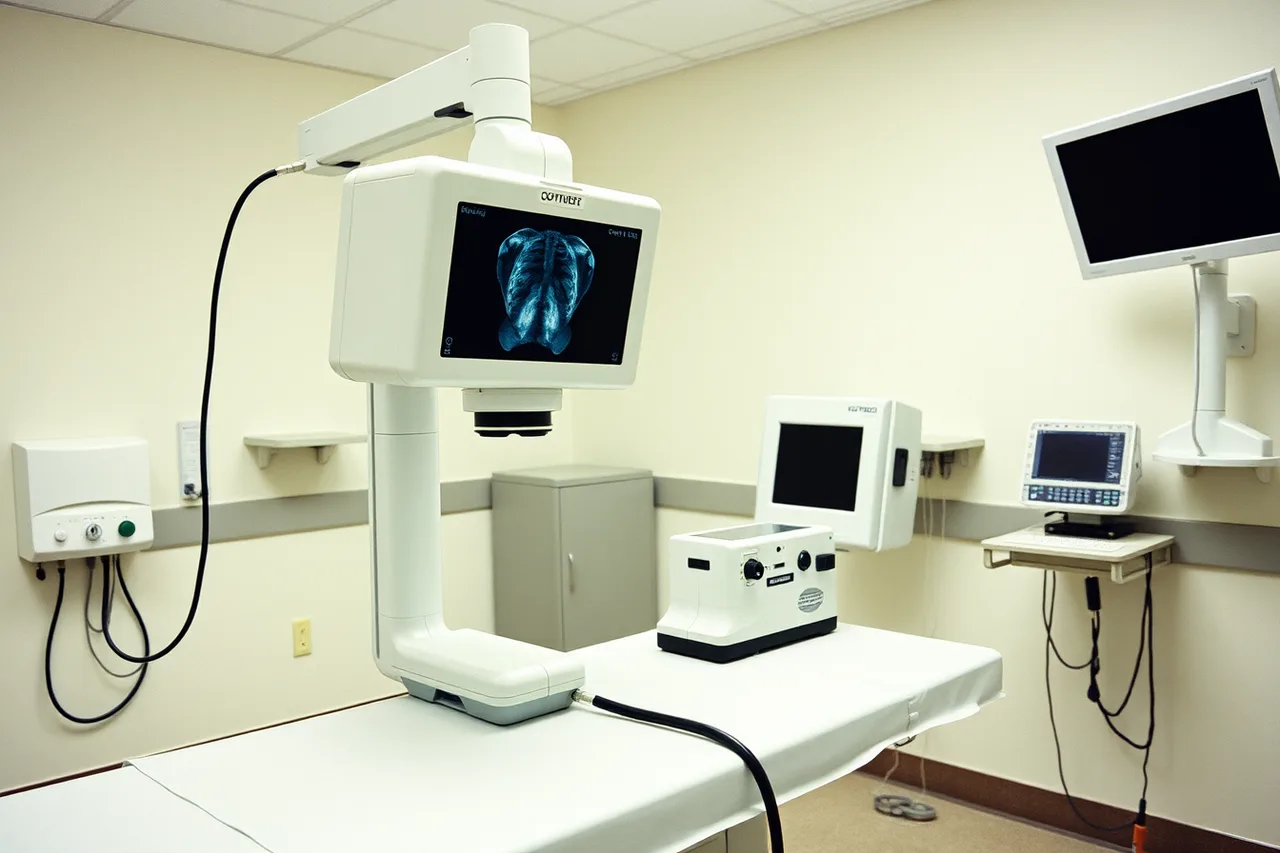
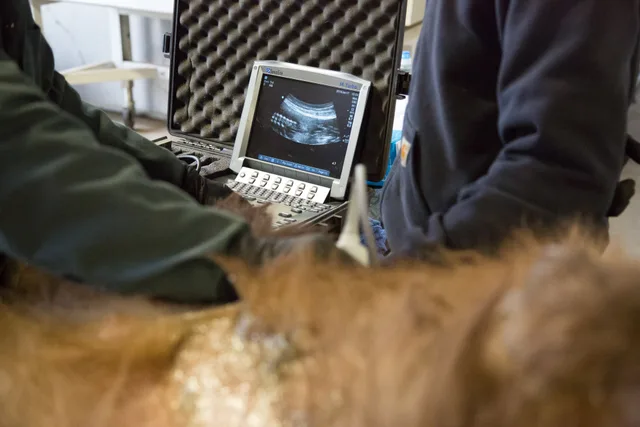
Qualifying property includes dental units, digital radiography, ultrasound, anesthesia machines, in-house lab analyzers, surgical lasers and practice vehicles above the weight threshold. Software and certain leasehold improvements can also qualify.
The deduction cannot create a loss. It is limited to the practice's taxable business income for the year, with any excess carried forward. That limit catches growing practices that buy a large equipment package in a slow year.
Bonus depreciation is the alternative. It allows an additional first-year deduction for qualifying property and does not carry the same income limit, which makes it useful for practices with modest profit and a big equipment purchase.
Section 179 also interacts with the S corporation wage decision. Deductions reduce the profit available for distribution, so equipment bought late in the year can lower the distribution while leaving the salary untouched.
Ordinary and necessary business expenses are covered in the IRS guide to business expense resources. Guide to business expense resources | Internal Revenue Service
- Confirm the equipment was placed in service before December 31.
- Keep the invoice showing purchase price and delivery date.
- Check the practice has enough taxable income to absorb the deduction.
- Decide between Section 179 and bonus depreciation before filing.
- Record the asset on a depreciation schedule for future years.
- Confirm the vehicle weight and business-use percentage if a vehicle is claimed.
Worked numbers: a three-vet practice comparing Schedule C and S-corp outcomes
Take a practice with three veterinarians, gross receipts of $1.8 million and net profit before owner pay of $520,000. The owner-doctor works four clinical days a week plus management. Two associates earn $125,000 each.
Schedule C vs S corporation
Sole proprietor
- Owner pay
- $520,000 profit
- Payroll tax on
- $520,000
- Distribution
- None
- Extra cost
- None
S corporation
- Owner pay
- $180,000 salary
- Payroll tax on
- $180,000
- Distribution
- $340,000
- Extra cost
- Payroll and 1120-S prep
As a sole proprietorship, the owner reports $520,000 on Schedule C. Self-employment tax applies to net profit: the Social Security portion applies up to the Social Security wage base, and the Medicare portion applies to all of it, with the additional Medicare tax above the threshold. The owner pays income tax on the full amount.
As an S corporation, the owner takes a salary of $180,000, which is close to what a lead veterinarian with management duties earns in the local market. The remaining $340,000 flows out as a distribution.
Payroll tax now applies to $180,000 rather than $520,000. The distribution is not subject to self-employment tax. The saving is real but not free: payroll processing, Form 1120-S preparation and a separate business account add cost.
The salary must survive scrutiny. If the owner's clinical schedule matches an associate's, a $180,000 salary for a practice this size is defensible. A $60,000 salary with the same schedule is not.
Now add equipment. The practice buys $150,000 of digital radiography and dental equipment in the same year. Under Section 179, the full amount reduces profit, which lowers both the distribution and the income tax bill. The salary stays where it is.
The comparison only works if the owner actually runs payroll all year and keeps the corporate formalities current. Skipping payroll or commingling funds gives the IRS grounds to disregard the election.
Records, deadlines and the EIN every practice needs
An employer identification number is the practice's tax identity. Sole proprietors without employees can use a Social Security number, but any practice with payroll, an S election or a retirement plan should have an EIN. Apply on the IRS site and keep the letter in the permanent file.
Records to keep
- Payroll registers
- W-2 and W-4 copies
- Reasonable compensation memo
- Asset purchase invoices
- Depreciation schedules
- Mileage logs
- Form 2553 acceptance letter
Key dates repeat every year. Form 1120-S is due the 15th day of the third month after year end. W-2s and 1099-NECs go out by the end of January. Quarterly payroll returns follow the payroll deposit schedule.
The practice also carries obligations beyond tax. DEA registration for controlled substances, USDA licensing where animals are sold or transported, OSHA logs and state board requirements all sit alongside the tax filings. Keeping licences, filings and checks in one calendar avoids the late fee that arrives because nobody owned the renewal.
Bookkeeping discipline makes all of this cheaper. A practice that tracks cash flow week to week closes its year faster and hands the accountant clean numbers instead of a shoebox.
Owners weighing a start-up or a second location should map where the money comes from before signing a lease, because lender requirements and SBA programs shape the first three years of tax planning.